How big does my sign need to be?
Roughly an inch of letter height per ten feet of reading distance. Tell us how far away it will be read from and we will size it properly.
 Grace Woodwork
Handmade wooden signs for Big Sandy — and straight advice on how big it needs to be and what it should cost, before you order anything.
The commonest mistake with a sign is not the wording or the color. It is the size, and it goes wrong in both directions. People order something too small for the distance it has to be read from, or they order something far bigger than the job needs and pay for timber nobody will notice.
The rough rule is an inch of letter height for every ten feet of reading distance. A name that has to be read from a car passing at forty miles an hour needs letters four inches tall or more. A house name read from the gate, twenty feet away, needs about two. That single calculation decides most of the cost, because the board has to be big enough to carry the lettering.
Every extra word makes the sign bigger or the letters smaller, and both cost you. A business sign wants the name and one thing you do. A gate sign wants the name. Established dates, telephone numbers and lists of services almost always belong somewhere other than a hand-cut timber sign — they date, and they force the lettering down to a size nobody reads anyway.
We will tell you when your wording is fighting your budget, because trimming three words is free and making the board bigger is not.
Spend on the things that decide whether it survives: the timber, the joints and the finish. A sign built from the right stock with cut joints and a properly cured finish will stand outdoors for years without anybody touching it.
Do not spend on carved borders, applied ornament or a second color that will not read from the distance it is being viewed at. Those add cost and, at any real distance, nothing else. A plain board with good lettering beats a decorated one every time from across a yard.
These are timber pieces, not printing. Real frames, real boards, joints cut rather than stapled, and a finish put on the way a table gets finished. Big Sandy started as Big Sandy Switch, where the Texas and Pacific met the narrow-gauge Tyler Tap, and it sits at the junction of Highway 80 and State Highway 155 — so a fair amount of what we make for here has to be read by somebody driving past.
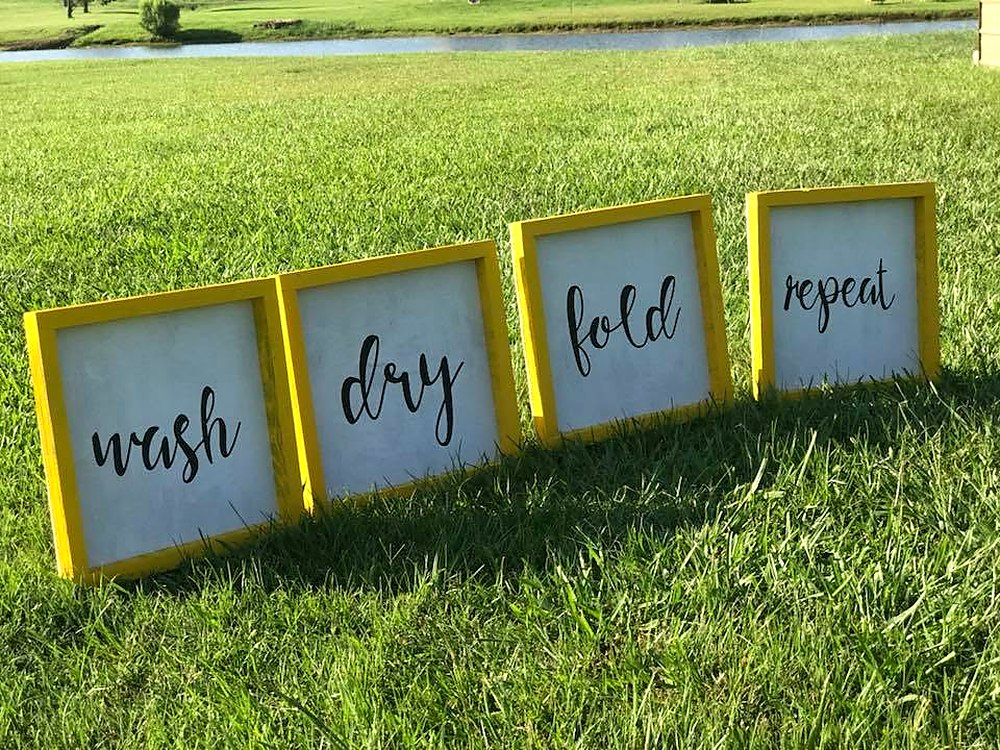
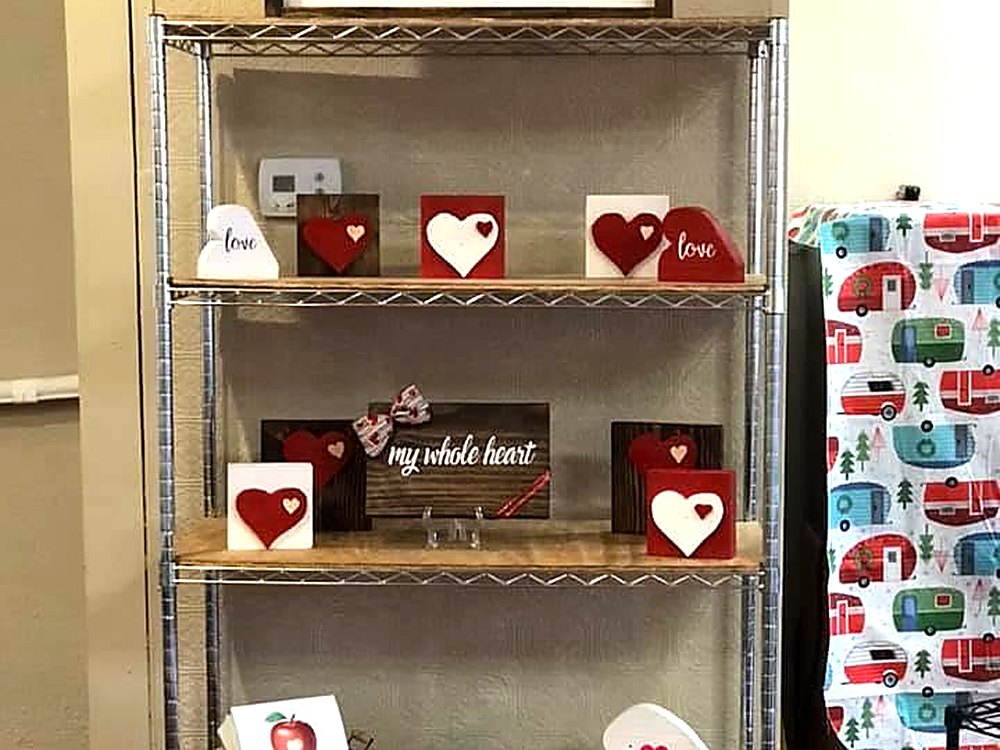
Business signage. Gate and farm names. Family names and established dates. House numbers. Scripture. Church signs and noticeboards. Nursery and children's room pieces. Wedding and anniversary signs. Memorial pieces. Kitchen and laundry wording. One sign is a perfectly normal order.
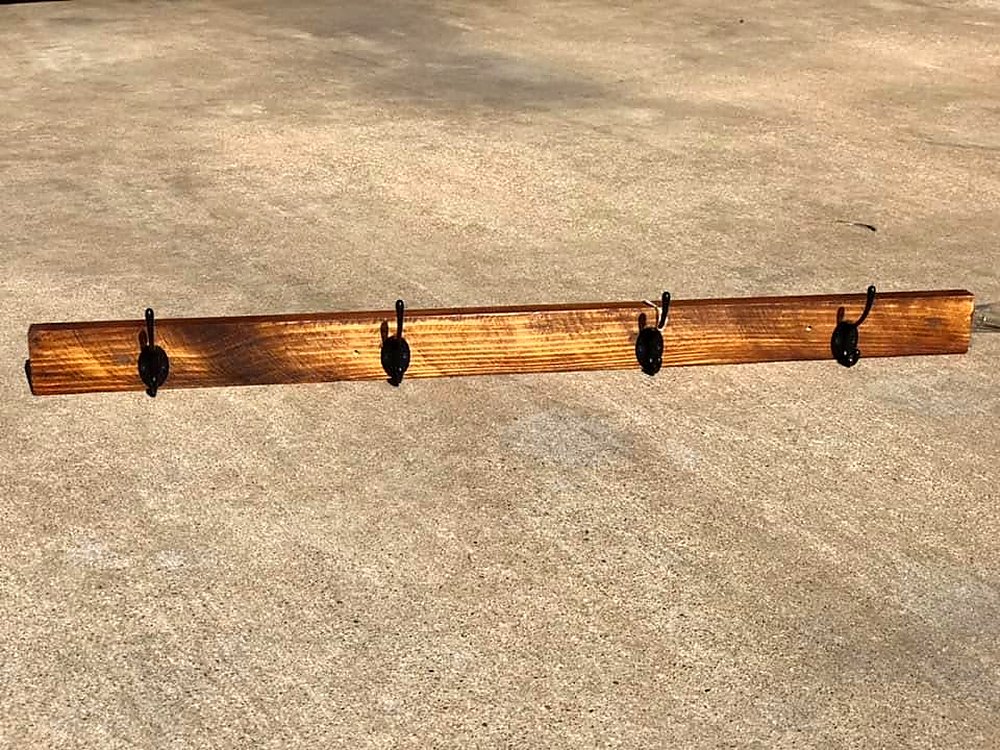
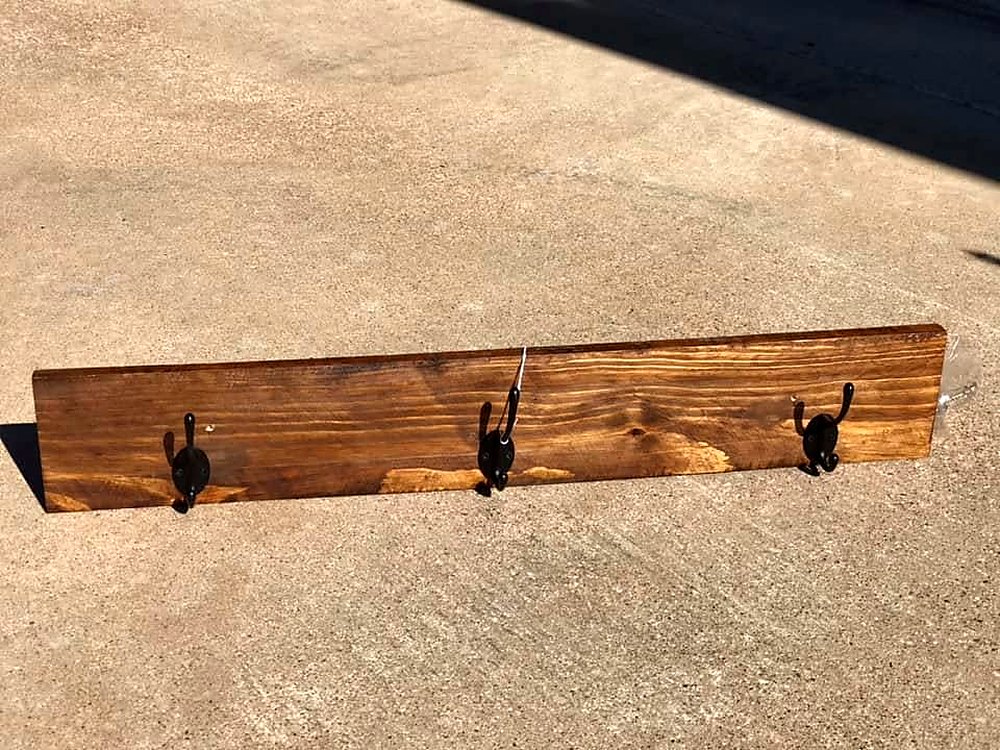
A close cousin of the sign work and one of the most-asked-for things in the shop. A stained board with cast hooks, cut to the length of wall you actually have, turns a back door into somewhere coats and boots go instead of the floor. They take lettering too.
It genuinely helps. There is more than one way to build most signs, and knowing the number lets us pick the version that fits it — a different timber, a simpler frame, an oil finish rather than a lacquered one. That is a better conversation than being quoted something you were never going to spend.
Roughly an inch of letter height per ten feet of reading distance. Tell us how far away it will be read from and we will size it properly.
Usually. Say the number at the start — there is more than one way to build most signs, and knowing the budget lets us pick the version that fits it.
Usually not. It dates, and it forces the lettering smaller. Keep the name and one thing you do.
No. One sign is a perfectly normal order.
The shop is in Kilgore and we travel from here — as far as Lufkin when the job is worth the drive.
A phone picture is plenty. We will tell you what it needs, what it will cost and roughly how long it will take — before you commit to anything.
Send a photo